Case studies / Case study
Building Forgeline's 3D wheel configurator inside Shopify
A Three.js wheel builder embedded in Forgeline's Shopify store lets drivers style every part of a forged wheel, see the price per wheel as they go, and send the finished build to the cart. Sales and leads grew roughly 10% within four weeks.
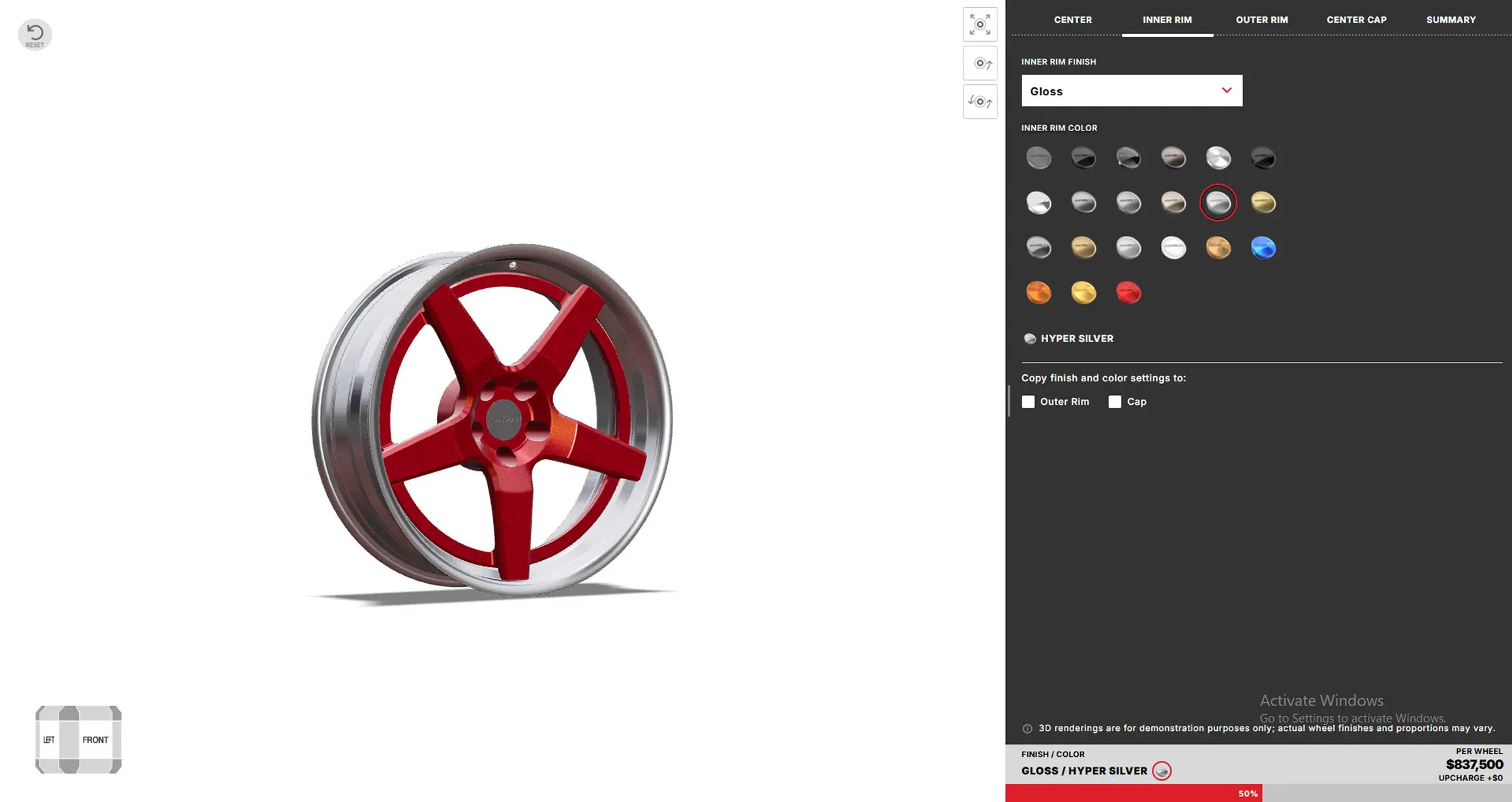
Forgeline builds forged performance wheels to order. A single wheel is a stack of decisions: the model and size, a colour and finish for the centre, the inner barrel and the outer lip, a cap, hardware, and options like beadlocks, many with their own upcharge. Customers spending this much want to see exactly what they're getting. A row of product photos couldn't show them.
I led the project that put a full 3D wheel builder inside Forgeline's Shopify store. Shoppers now style each part of the wheel in real time, watch the per-wheel price change with every choice, and add the finished build to the cart with all of its details attached.
What made this hard
The catalogue was huge and irregular. Over 300 wheel variations, each with its own geometry, sizes, finishes and price rules. A generic product-page plugin had no way to represent that.
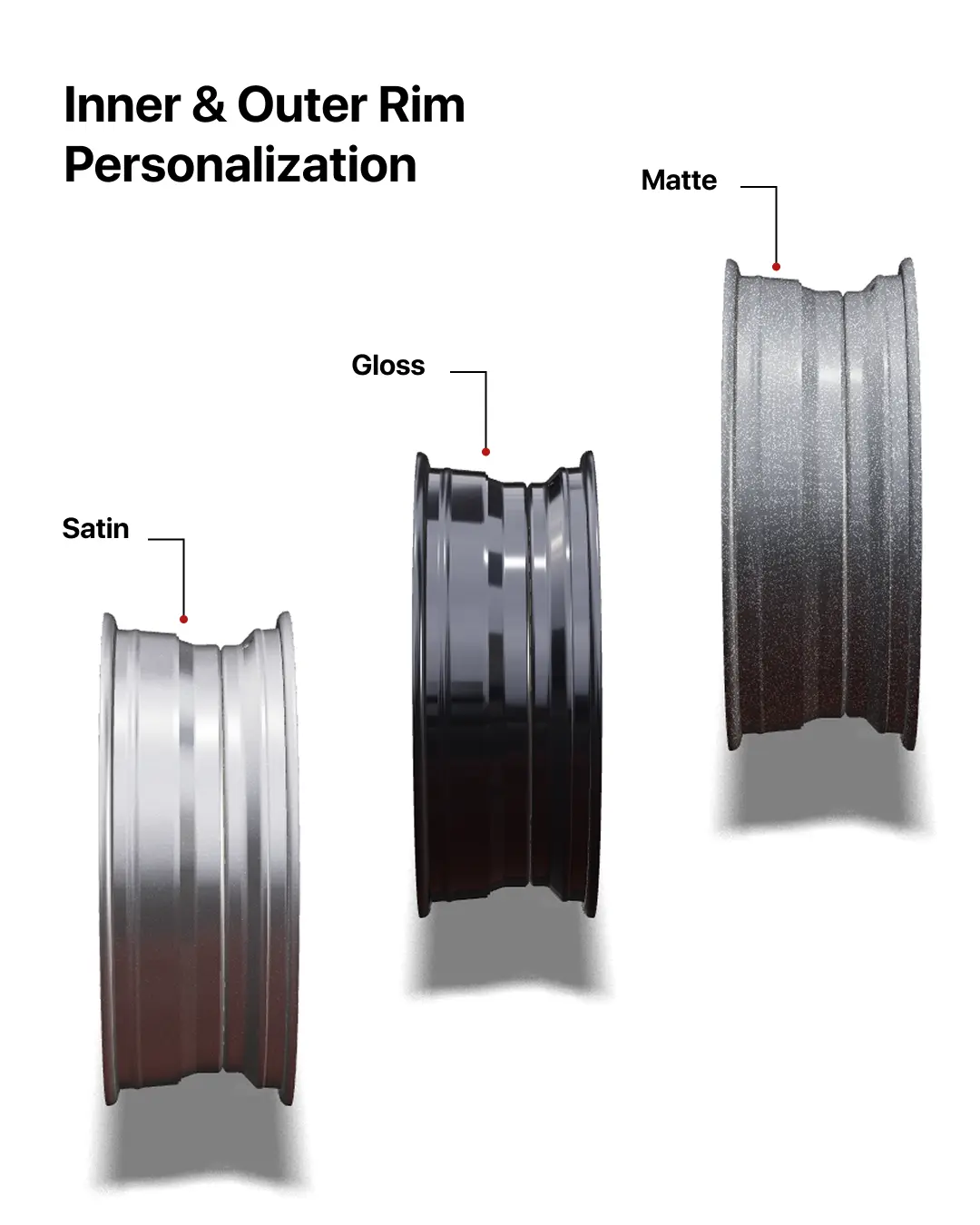
Finishes had to look right. The gap between a gloss, a satin and a matte finish on polished aluminium is exactly what a buyer is judging. Transparent and metallic colours make it harder. All of it had to render convincingly in a browser, on a phone as well as a desktop.
Every wheel model was different under the hood. UV layouts and material zones changed from model to model, so one shared material setup wouldn't work.
The 3D view had to drive the checkout. A pretty viewer was not the goal. Every colour, hardware choice, beadlock and cap had to become a Shopify line item at the right price, so the order and the picture always match.
How the builder works
- Start from the product page. A shopper opens a wheel model in the store and launches the builder in place.
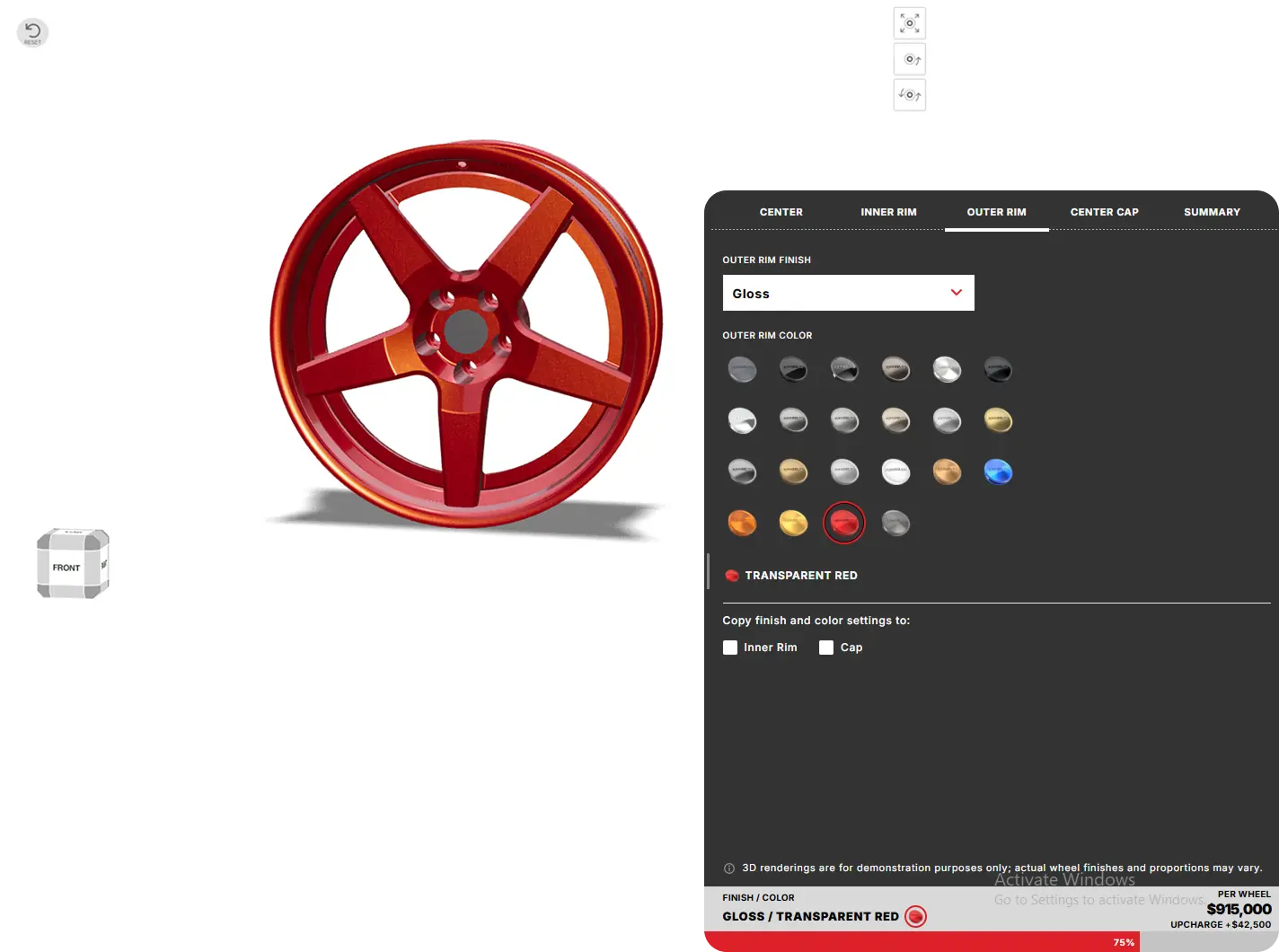
- Style it part by part. Separate tabs for the centre, the cap and each half of the rim offer a finish (gloss, satin, matte and more) and a colour palette. One tick copies a finish and colour to the other parts.
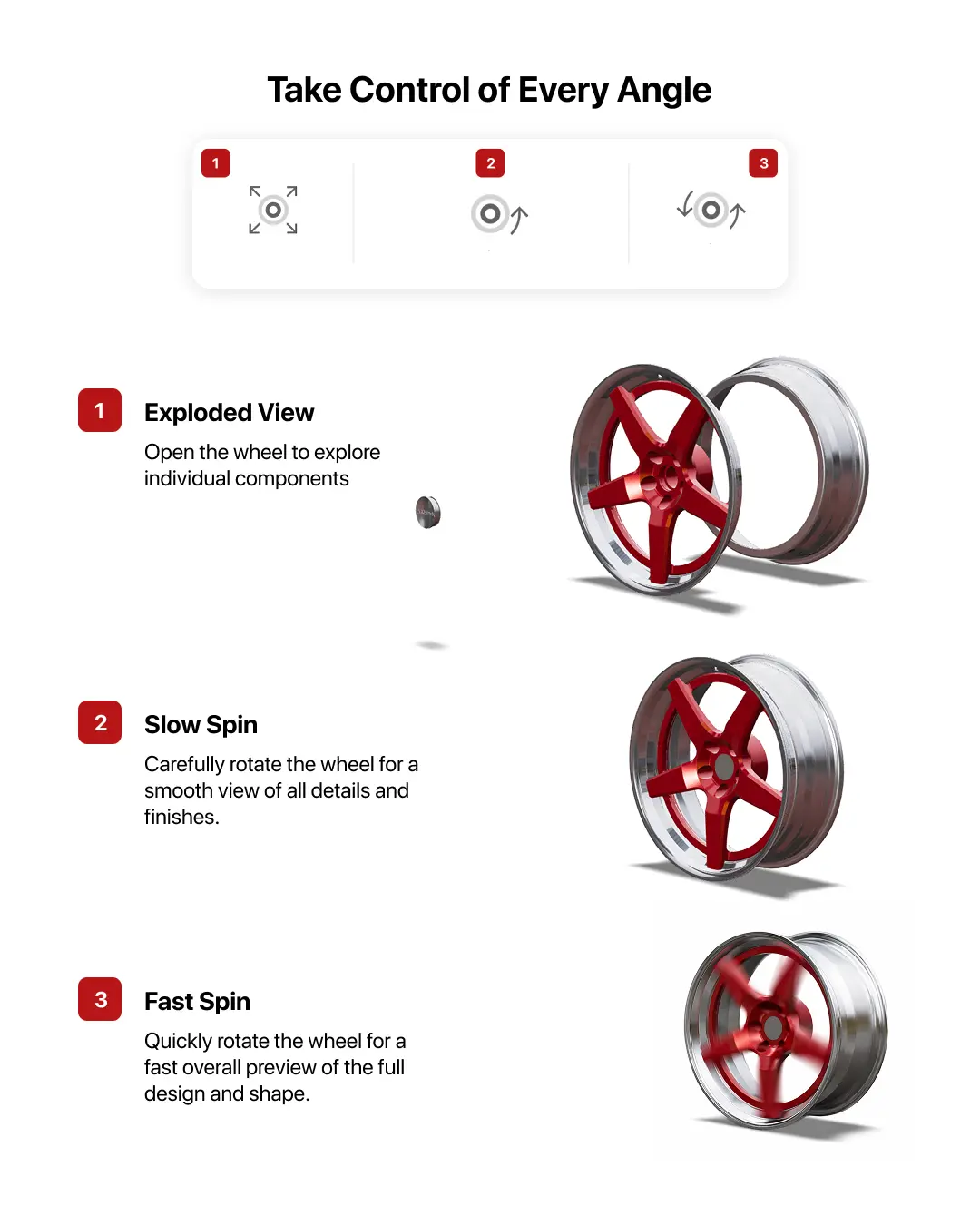
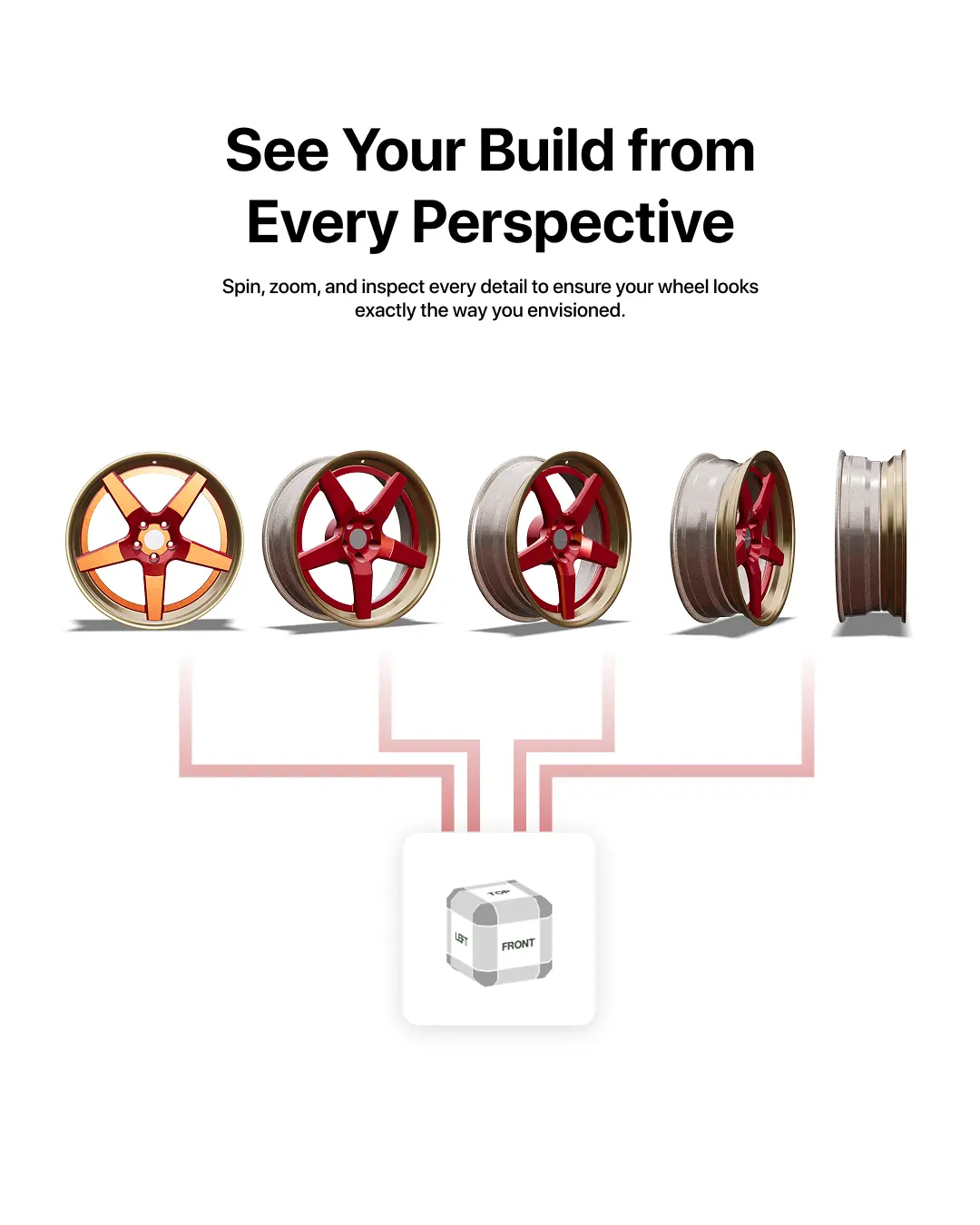
- Inspect it from every side. Drag to orbit, zoom into the lip, or open an exploded view that separates the wheel into its pieces. Slow and fast spin modes make it easy to judge the whole design.
- Watch the price. A running per-wheel total and the upcharge for each option stay visible the whole time.
- Add to cart. A summary tab lists every choice. One click sends the configured wheel to Shopify, with each option as data the store and sales team can read.
Under the hood
| Layer | What it does |
|---|---|
| Custom Shopify app | Embeds the builder in the store, with no separate admin panel |
| Next.js | The builder's interface: tabs, palettes, summary, responsive layout |
| Three.js | Real-time rendering, camera controls, exploded view, material switching |
| Product logic | Loads the right model, sizes and options for each wheel; works out pricing and upcharges |
| 3D assets | Wheel models built for this project and optimised for the web |
Making 300+ variations feel instant
Rather than shipping every model up front, the builder loads only the wheel, textures and options the shopper actually picked. Models and textures were trimmed and compressed until the scene stayed smooth on mid-range phones, without losing the premium look.
Finishes that read correctly
Each wheel was prepared so every configurable zone has its own clean material slot, whatever its UV layout. On top of that, the material setup gives gloss, satin, matte, metallic and transparent options their own believable response to light. A shopper can tell a satin bronze from a gloss bronze at a glance, without any offline rendering.
Keeping picture and price in step
Every choice in the 3D view is tied to a priced Shopify option. The state of the scene, the running total and the final cart item all come from the same source, so the configured wheel and the order can't drift apart.
A lean team, a fast build
I led the project with development and 3D production working as one unit, so model changes and code changes were checked against each other daily. The core builder was working in about two weeks. The remaining time in the twelve-week schedule covered catalogue data, store integration, modelling every wheel, QA and the go-live.
Results
Within four weeks of going live, Forgeline saw sales and new leads grow by roughly 10%, by their own estimate.
Beyond that number:
- Buyers commit with confidence. They see their exact wheel, in their exact finish, before paying.
- Sales gets complete orders. Every option and upcharge arrives with the order, so nobody has to phone the customer to check what they meant.
- Better leads. Even shoppers who don't buy straight away leave clear signals about what they want.
- Marketing has a showpiece. Shoppers explore longer, try more combinations, and share their builds.
- It works on phones. The builder is fully usable on mobile, where much of the browsing happens.
Who this suits
Any brand that sells a made-to-order product with many visual options and price-affecting add-ons, such as wheels, furniture, bikes, equipment or fixtures, can use the same pattern. Put a real-time 3D builder where the buying decision is made, connect it properly to the cart, and let customers design what they buy.
Related work
3D Wheel — Forgeline
A series of interactive 3D wheel configurators for Forgeline, letting customers explore wheel designs and customize finishes, sizes, and other options in real time before purchase.
Car Configurator
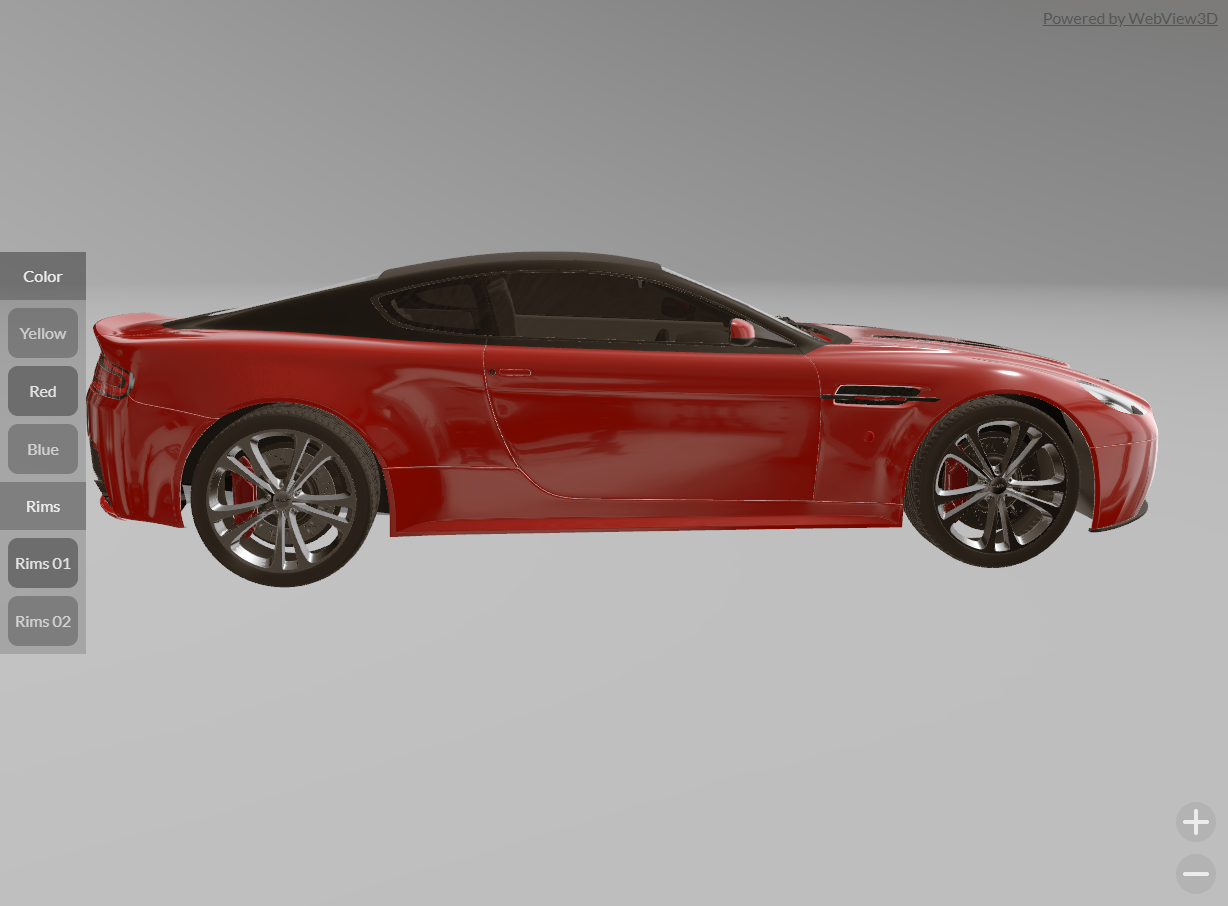
An interactive 3D car configurator using Three.js, Babylon.js, and WebGL for a smooth real-time web experience — customize body colors and rim styles with dynamic lighting, reflections, and high-quality 3D rendering.
Garage Storage 3D Configurator
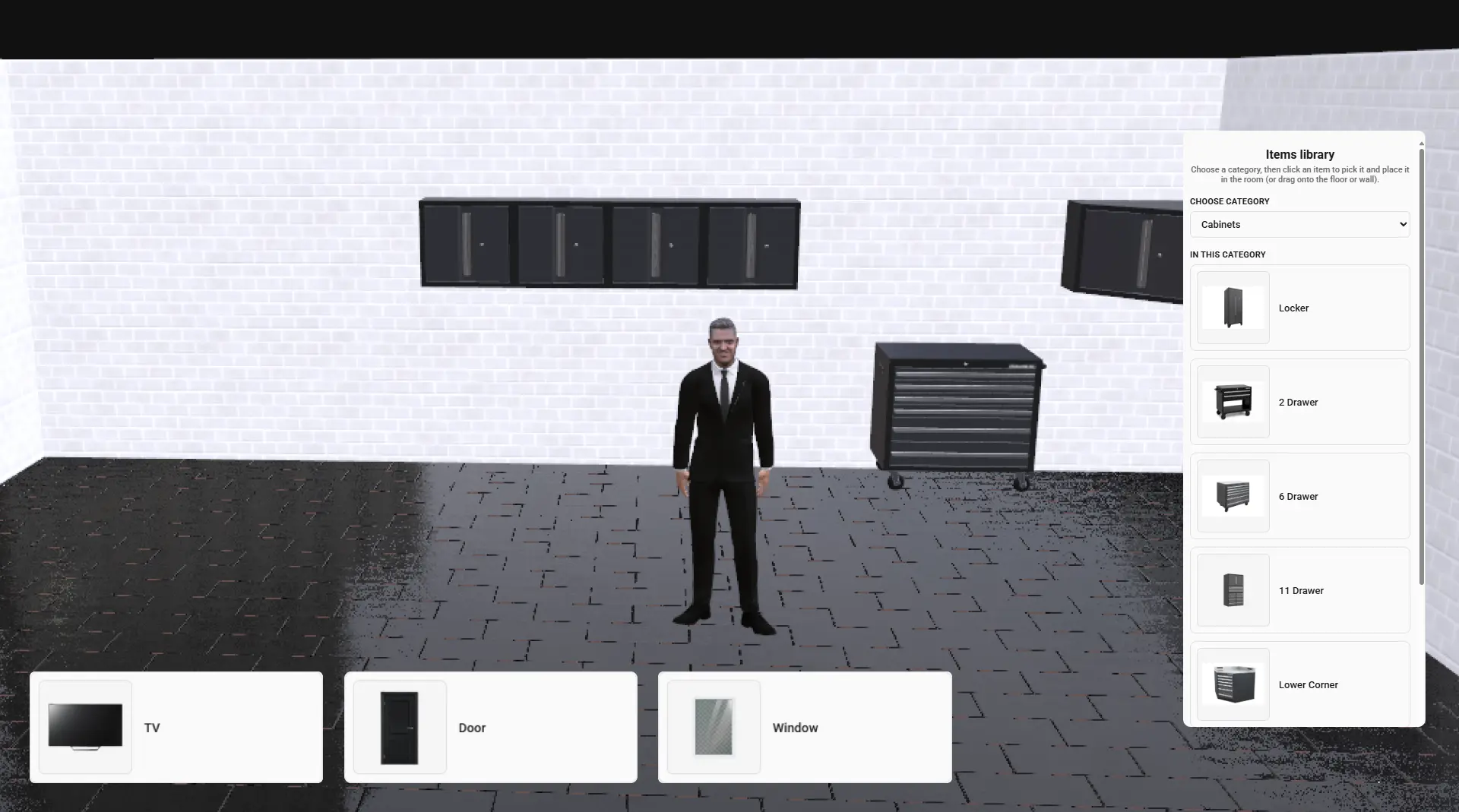
A browser-based 3D room planner for a Pennsylvania garage-storage brand: customers design their garage with ~30 configurable products and send a quote-ready lead straight from Shopify.
Planning something similar?
Tell me what you're building and I'll reply with a technical take on how I'd approach it.
Get in touch →